Shammi Rana to Receive FOG Global Icon Award 2024
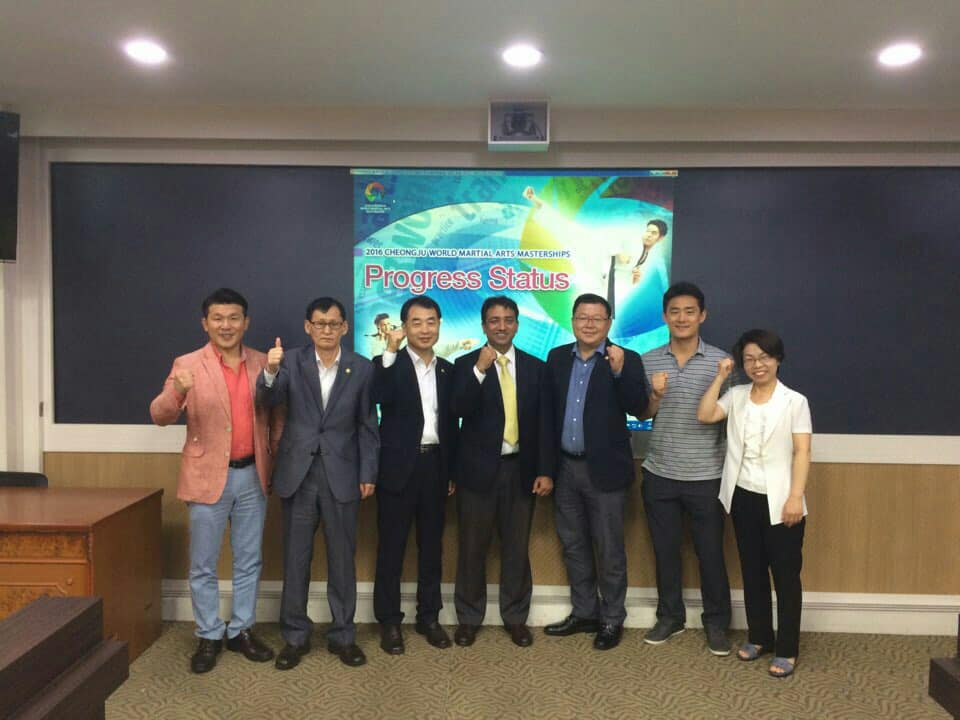
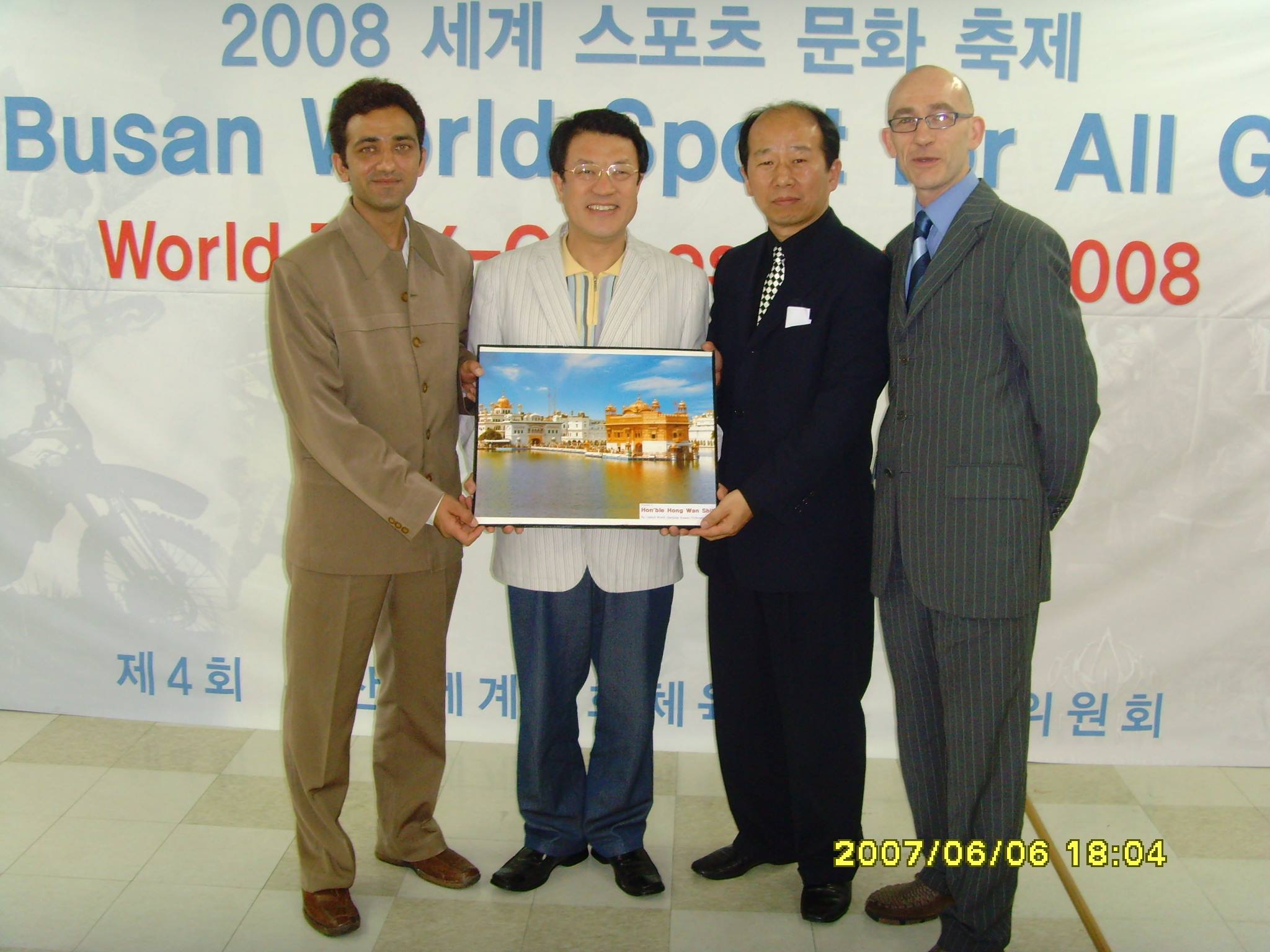
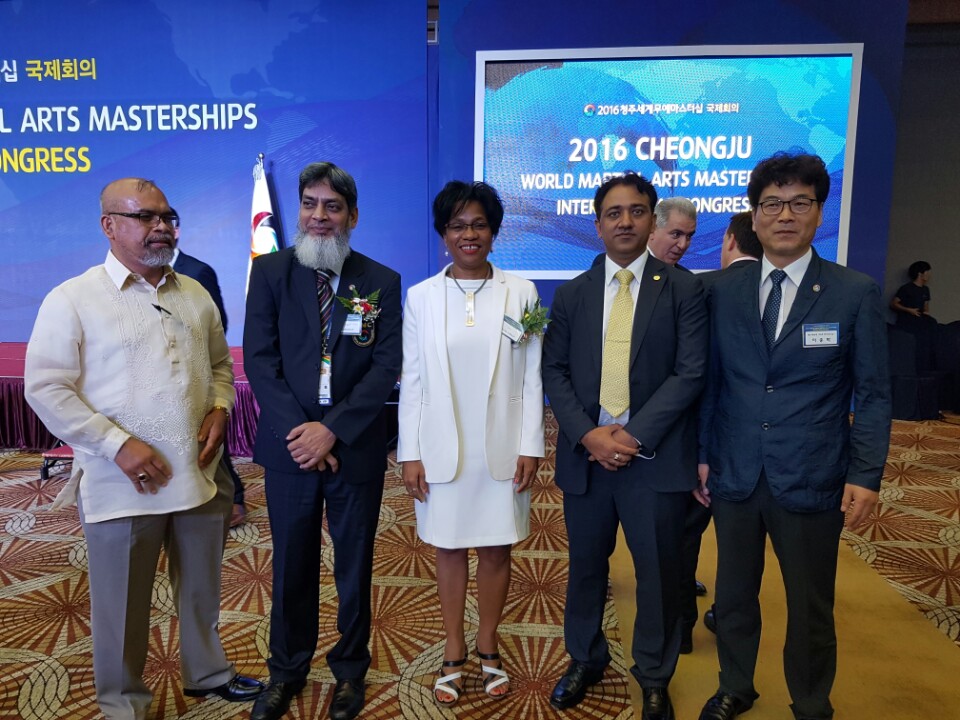
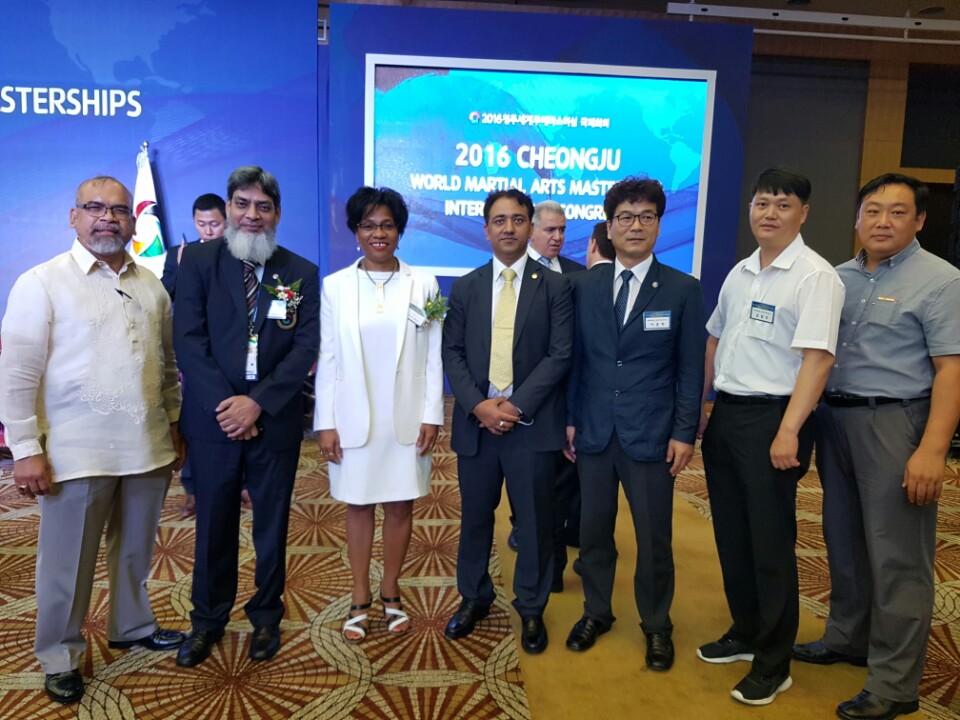
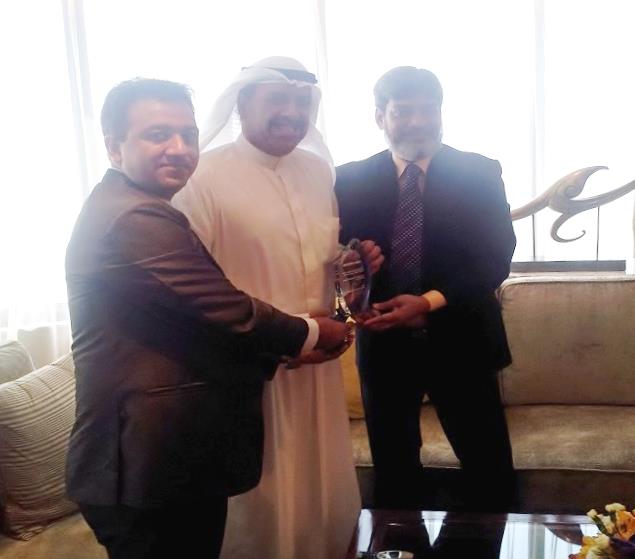
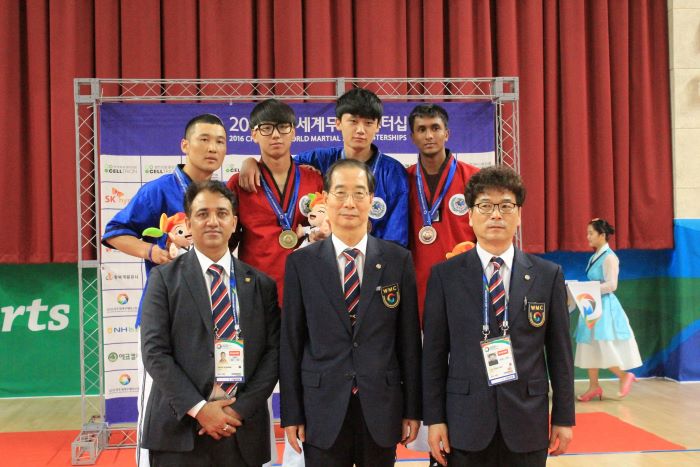 In Picture Shammi Rana with the Ex-Prime Minister of South Korea
Shammi Rana to Receive FOG Global Icon Award 2024
-THE ASIAN INDEPENDENT
Fremont, California – August 18, 2024
Shammi Rana, a passionate advocate for traditional sports and games, will be honored with the FOG Global Icon Award 2024 at the 32nd FOG India Day Parade and Fair. This vibrant celebration of Indian culture, organized by the Federation of Indo-Americans of Northern California, will take place on August 18, 2024, in Fremont, California.
Celebrating a Visionary Leader
Mr. Rana serves as the Secretary-General of the International Council of Traditional Sports and Games. His dedication to preserving and promoting traditional sports has earned him this prestigious award. Mr. Rana’s work has not only highlighted the cultural significance of these sports but also emphasized their role in promoting physical health, mental well-being, and community spirit.
A Lifetime of Achievement
Throughout his career, Mr. Rana has been a key figure in the world of traditional sports. His tenure as the Rapporteur of the Ad Hoc Advisory Committee on Traditional Sports & Games at UNESCO (2017-2020) was marked by significant achievements. He played a crucial role in developing policies that support the growth and sustainability of traditional sports, inspiring many countries to revive and promote their indigenous games.
As Secretary-General of the International Council of Traditional Sports and Games, Mr. Rana has led numerous initiatives to raise global awareness and participation in traditional sports. His efforts have ensured that these cultural treasures are celebrated and preserved for future generations.
A Festival of Culture and Community
The FOG India Day Parade and Fair is one of Northern America’s most anticipated events. Drawing over a hundred thousand attendees each year, the festival showcases Indian culture through colorful fairs, cultural booths, and captivating dance performances. It is a joyous occasion that brings together mainstream Americans and the next generation of Indian Americans.
Community Support and Involvement
The festival is also a hub for community support. Hundreds of volunteers work tirelessly to bring this event to life, reflecting the values and traditions of Indian culture. A standout feature is the Health Fair, where physicians and professionals offer free medical check-ups, testing, and advice to attendees, promoting health and well-being within the community.
Star-Studded Tradition
Over the years, the FOG India Day Parade and Fair have welcomed numerous Bollywood stars, including Amitabh Bachchan, Dharmendra, Vyjayanthimala, Asha Parekh, Vinod Khanna, Tabu, Urmila Matondkar, Poonam Dhillon, Amrita Rao, Sonu Sood, Aftab Shivdasani, Neha Dhupia, Sushmita Sen, Meenakshi Seshadri, Esha Deol, Ayushmann Khurrana, Randeep Hooda, Tusshar Kapoor, Tanishaa Mukerji, Vivek Oberoi, Abhimanyu Dassani, and Mahima Chaudhry.
Supporting the Underprivileged
The Federation of Indo-Americans of Northern California is committed to supporting underprivileged and needy sections of the community. Programs like ‘Asra,’ which assists victims of domestic violence, and free health and wellness sessions, exemplify their dedication to improving lives and promoting the idea of ‘Vasudev Kutumbakam’ – the world is one family.
Honoring a Champion
Shammi Rana’s tireless efforts to promote traditional sports and build international harmony make him a deserving recipient of the FOG Global Icon Award 2024. The Federation of Indo-Americans of Northern California is thrilled to honor him at this year’s festival on August 18, celebrating his remarkable achievements and contributions to society.
Shammi Rana honored with the Presidential Award 2020
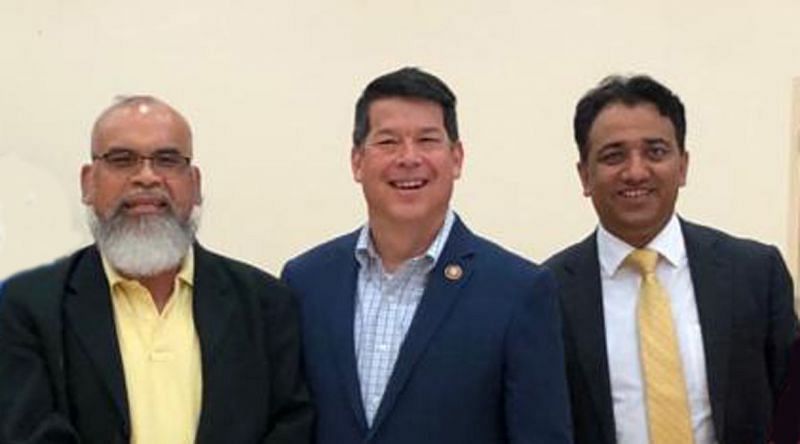 Shammi Rana with Terrance John Cox Representative for California’s 21st Congressional District(File Photo)
Shammi Rana, Secretary-General of the International Council of Traditional Sports and Games, has been honored with the President’s Achievement Award 2020, for his dedication and hard work in safeguarding and promoting Traditional Sports and Games (TSG) as sports practices and intangible cultural heritage.
His work is so revered that in 2017, the United Nations Educational, Scientific, and Cultural Organization appointed him Rapporteur of the UNESCO Traditional Sports and Games Ad Hoc Advisory Committee to promote the 2017 Traditional Sports and Games, UNESCO.
Shammi Rana does a huge amount of work to promote the UNESCO Mandate on Traditional Sports and Games throughout the world, having over two decades of experience under his belt as a promoter of sports, sports organizations, and sports diplomacy.
 with Hon’ble Mtolea Abdallahally Member Parliament Tanzania
Recently, he made a visit to Sierra Leone to meet with officials at the Ministry of Sport, Africa TSG Union, and Sierra Leone TSG Association members to discuss with the government the proposed setup of an administrative and research secretariat in Sierra Leone. In his dialog with the Deputy Sports Minister, Kai Lawrence Mbayo, Mr. Rana explained the sports and ICTSG’s move to spread traditional sports across Africa. He also promised that they would give full support to Sierra Leone if the country remained committed to housing the Secretariat.
 With Hon’ble Kai Lawrence Mbayo Deputy Sports Minister of Sierra Leone
Mr. Rana works closely with Mr. Scott Wendel, and Central American Educational and Cultural Coordination (CECC / SICA) in a bid to create the Pan American Council of Traditional Sports and Games, the organization whose function will be to safeguard, develop and promote traditional sports and culture in America.
Rana receives President's Achievement Award.
Shammi Rana, the Secretary-General of the International Council of Traditional Sports and Games, has been awarded the President's Achievement Award 2020 for his devotion and commitment to conserving and promoting Traditional Sports and Games.
 Shammi Rana
His contributions to this field span far and wide, including his role in promoting the United Nations Educational, Scientific, and Cultural Organization (UNESCO’s) mission in TSG across the globe, through diplomacy and support for sports organizations.
What are Traditional Sports and Games?
TSGs are movements that form a part of our cultures, such as dancing, ball games, aquatic sports, camel wrestling, bullfighting, and much more. TSG is an essential part of our past and contributes to who we are as individuals and as a varied group of cultures. TSG communicates the tale of our past in a way that no other medium can; by transcending gender, generation, and individual boundaries.
As a UNESCO program run under United Nations, TSG protects and promotes gaming and sporting activities that are inextricably linked to culture and customs all over the world.
Shammi Rana as UNESCO'S Rapporteur
In 2017, UNESCO appointed Shammi Rana as rapporteur of the Traditional Sports and Games Ad Hoc Advisory Committee. His activities entail overseeing the UNESCO mission on TSG across the world. His collaboration with Sierra Leone to construct an administrative and research department in the country is an excellent example of his great works.
During his visit to Sierra Leone, Mr. Rana met with officials from the Ministry of Sport, members of the Africa TSG Union, and the Sierra Leone TSG Association to discuss the prospects of establishing the research and administrative secretariat, whose goal is to spread traditional sporting activities in Africa. Mr. Rana addressed this mission while in conversation with the Deputy Minister of Sports, Kai Lawrence Mbayo. He also pledged full support for Sierra Leone’s initiative in sports if the country remained committed to the cause.
Shammi Rana is also collaborating with Mr. Scott Wendel of the United States and Central American Educational and Cultural Coordination to establish the Pan American Council of TSG. If it is formed, this group will oversee and protect traditional sporting activities and culture in the United States.
Summary
With over two decades of experience as a promoter of sports and related organizations and diplomacy, Shammi Rana continues to contribute tirelessly towards enhancing the UNESCO role in TSG worldwide. His goal is to defend Traditional Sports and Games from commercialization that harms cultural legacy and fundamental values. He believes that TSG should be encouraged worldwide, particularly in areas where resources are scarce.
United States Traditional Wrestling Society President recently meet with Shammi Rana Rapporteur of the Adhoc Advisory committee, UNESCO Traditional Sports & Games
 Scott Wendel, President of the United States Traditional Wrestling Society recently meet with the Rapporteur of the Adhoc Advisory committee, UNESCO Traditional Sports and Games Mr. Shammi Rana during his visit to the United States to promote UNESCO Traditional Sports and Games . Rana, along with TSG Committee Chairman Khalil Khan recently made headlines having been invited by H.E. Bilal Erdogan to the forum for the revival of traditional sports held in Antalya, Turkey February 2018 where Chairman Khan delivered a stirring presentation.
Mr. Rana and Mr. Wendel discussed the creation of a Pan American traditional wrestling organization. The function of the organization will be to safeguard, develop and promote traditional wrestling styles in the Americas. Mr. Wendel was tasked to coordinate a PanAm group under the guidelines of the International Association of Traditional Wrestling Sports which is the main stake holder of UNESCO Traditional Sport and Games.
Mr. Harpreet Arora, Chief Financial officer of the USTWS contributed his business and technological expertise to the meeting and will use his business leadership to guide the new group with its financial strategies and business plan. Mr. Arora owns a successful internet technology company and has a passion for advancing cultural understanding through sports.
Hon. John Clendenin, Commissioner and Chairman Emeritus of the U.S. Virgin Islands Public Services Commission will play a pivotal role in the PanAm group. The founder and president of Athletic Motivation Institute (AMI) he is a retired U.S. Marine Lieutenant Colonel with an extensive background in International competition. John teaches multicultural leadership as a former senior faculty member of the Harvard Graduate School of Business and past Senior Associate Dean of the University of Madrid. His specialty is in the human dynamics of sports. He is a member of the International Association of Sports Psychologists (IASP) and the New York Academy of Sciences. Professor Clendenin brings with him a wealth of knowledge and public service that will allow him to coordinate with local, territory, state, and federal governments and organizations.
The United States Traditional wrestling society is a cultural preservation nonprofit that protects and promotes the intrinsic values of indigenous and relocated peoples. The intangible cultural heritage of humanity comprises cultural practices and expressions that help demonstrate the diversity of this heritage and raises awareness about its importance.
The society successfully represented the USA in the World Nomad games in 2016. It also organized and sent teams to compete in the Belt wrestling, Kazakh Kures and Celtic world championships. The USTWS has put on many demonstrations, seminars and referee clinics all in an effort to spread the growth of traditional wrestling styles in the States. Youth competitors traveled to Scotland to attend training camps with fellow students from France, England and Iceland. They toured the countryside to visit the historic sites and compete in the Highland games. The society is currently in the process of adding Scottish Wrestling to the Highland games in the United States.
Wendel has been a Physical Education instructor for the past 20 years and has been working to develop character education and cultural competency understanding in schools. Wendel states that the ability to understand and communicate allows effective interaction between people from diverse cultural backgrounds. This competency encompasses developing positive attitudes toward cultural differences, gaining knowledge of different cultural practices and different world views. The future of this initiative begins with children. The group plans on becoming involved with the public school systems to use this platform to increase student’s cultural competency.
Wendel has invited UNESCO TSG Rapporteur Shammi Rana and committee Chairmen Khalil Khan back to the United States for a round of meetings in which to discuss the execution of the initiatives that were discussed and how best for move forward to make them a more concrete plan of action. Wendel also is planning to host the next collective consultation meeting for the safeguarding and promotion of traditional sports and games in the USA.
Since the United States is a melting pot of culture, it is the perfect location to host an international traditional wrestling event. The PanAm group is planning to host an international celebration to bring together all interested parties and athletes to participate in a traditional event.
Traditional attitudes and values have been marginalized due to an ever increasing shift toward professionalism and commercialism. The Pan American Traditional Wrestling group will work to identify and unify diverse cultures through our activities. The group will become a regional partner of the International Association of Traditional Wrestling Sports. IATWS is a key partner of Traditional Sport and Games of UNESCO.
Everyone is searching for their true identity and who they are in this day and age. Knowing your cultural traditions and values and participating in them allows a person to gain a large piece of their heritage. This allows people to have their distinct way of life live on for future generations. Indeed, this future is looking very bright for cultural diversity and understanding in the Americas.
UNESCO TSG CHAIRMAN, SECY. AT ETHNOSPORT MEETING
 H E Bilal Erdogan of World Ethnosport Confederation has invited the Chairman, Mr. Khalil Ahmed Khan; and Mr. Shammi Rana, Rapporteur, Traditional Sports and Games, UNESCO to attend the forum for the Revival of Traditional Sports that was held at Antalya, Turkey on the 17th and 18th February 2018.
Mr. Rana and Mr. H E Bilal Erdogan discussed about hosting 4th Collective Consultative Meeting of Traditional Sports and Games in Turkey. The sole intention of this meeting is to preserve and promote the concept of Traditional Sports and Games.
The UNESCO Chairman introduced and explained the frame work and the scope of UNESCO to the members at the forum. Members were representatives from Sports Federation, UNESCO and Non-Government Organizations. He explained the views and background to the Traditional Sports and Games project which was to vitalize the TSG and safe guard the same.
Ethnosport meaning people’s sports is a set of traditional forms of structured physical activities to a specific region, culture or race. On the path of globalizing it, restructuring ethnosports with explicit refereeing, standardizing ethnic equipment and scoring systems are a big step in unifying the diverse culture-specific sports. Martial arts, Yoga, Belly dance are only a few examples of Ethnosports.
Determined to preserve and protect traditional activities, many countries are proclaiming themselves as a part of United Nations’ Educational Scientific and Cultural Organization’s World Heritage programs. A separate and specific department – The Social and Human Science, of UNESCO, takes the responsibility of coordinating traditional sports from various sporting institutions from all around the world.
In 1999, observing the need for protecting and preserving traditional sports and physical education, the third International Conference of Ministers and Senior Officials responsible for Physical Education and Sports was called. Subsequently, in 2004 and 2005, improving efforts were made to safe guard TSG. The first collaborated meeting was held in Paris on 6th and 7th of the year 2017. The policy that gives guidelines to take TSG to the National, International and global level were framed.
As of today, the mission of the Federation for Wrestling with key partnership from UNESCO is to successfully protect the game, its operations and sustainability. This is suggested as bench mark for the rest of the traditional games. In 2008, to take TSG to the global level, UNESCO conducted ‘Scientific Conference’, ‘Green Festivals’ and ‘Play for Peace’ which greatly revived TSG.
The four main subcommittees under the guidance of UNESCO are working on –
- Online encyclopedia and digital and print data base
- Policy guidelines – preservations and practices of knowledge on sports and games
- To create international platform to regulate under one framework
- To manage resources, communication and to generate funds
TSG has been marginalized due to increased professionalism, commercialization and value shift. UNESCO along with TSG federations aims at safeguarding, advocating, promoting and developing TSGs. The chairman suggested that the governments can volunteer to create data base about their traditional game and can ensure the inclusion of their games at the national and international forums that will enhance the governments’ identity and unify diverse cultures through sports. In turn peace and heritage retention can be achieved is the vision of the chairman.
3rd Collective Consultation for the safeguarding and promotion of Traditional Sports and Games UNESCO

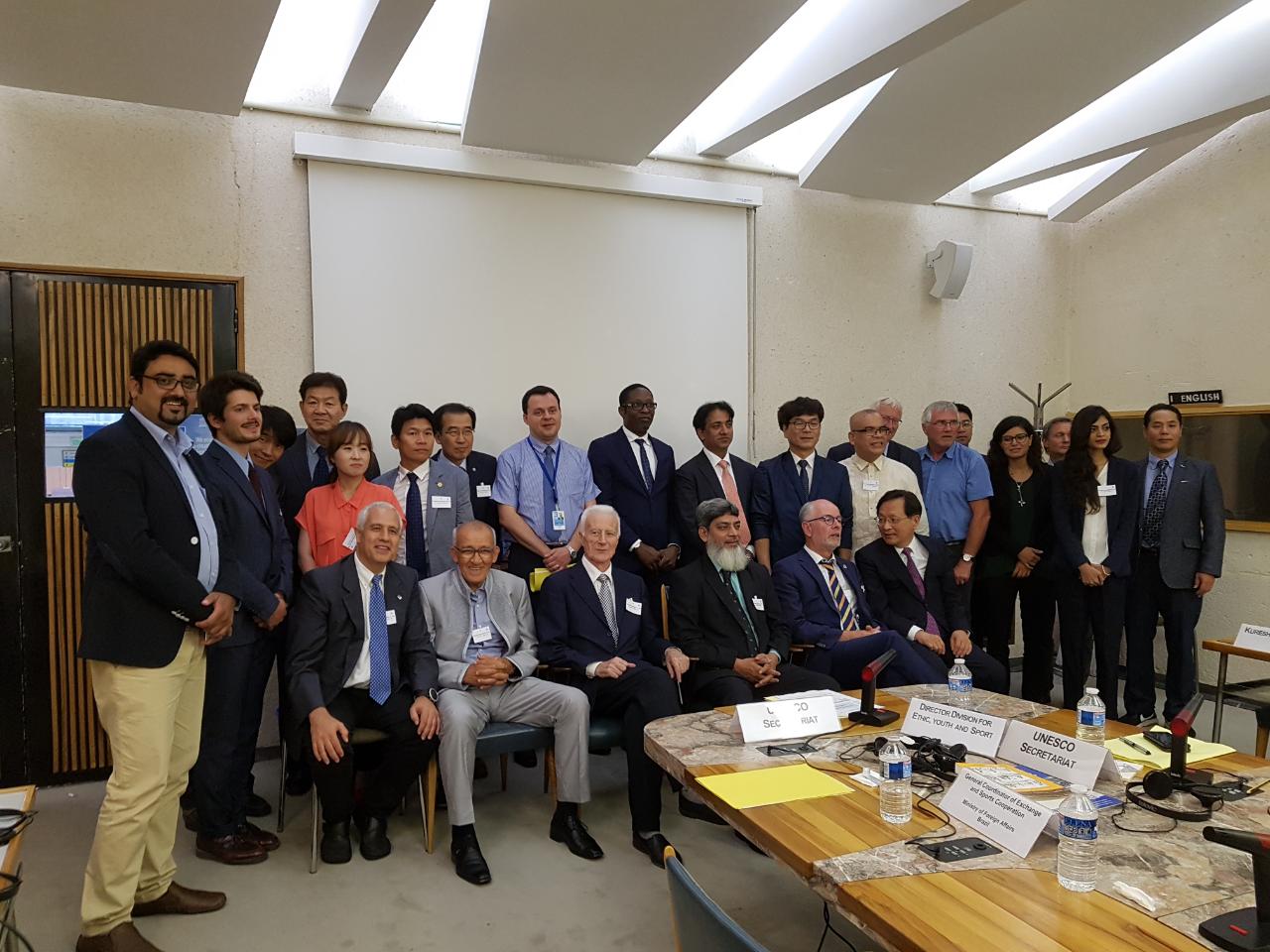
3rd Collective Consultation for the safeguarding and promotion of Traditional Sports and Games UNESCO that was held on 6th & 7th July 2017 at UNESCO Headquarters in Paris, France, this Committee in collaboration with UNESCO Secretariat
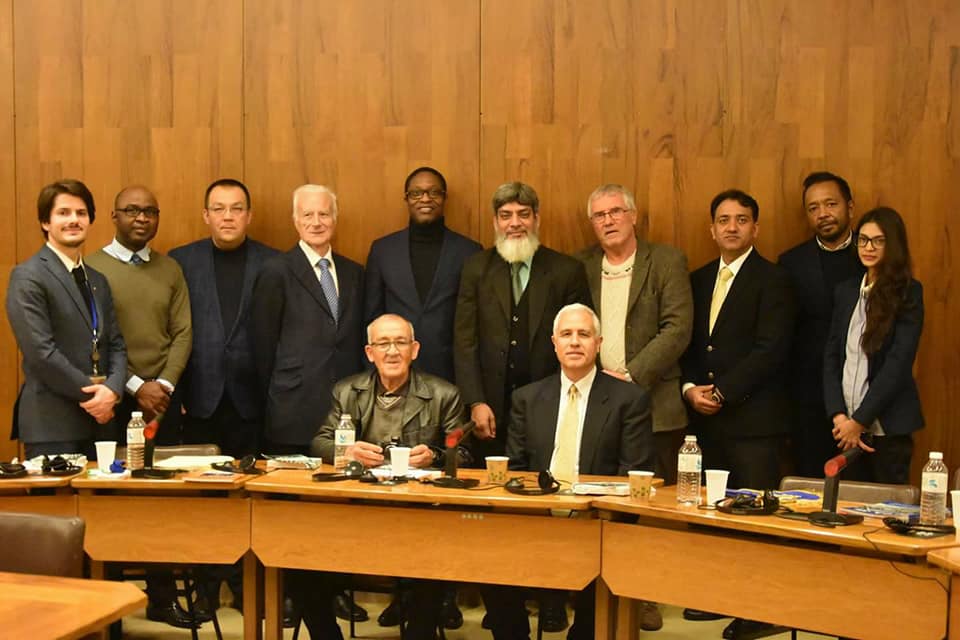
Technical Meeting of UNESCO TSG was held on 8th December 2017 at Paris, France

Technical Meeting of Traditional Sports and Games UNESCO was held on 8th December 2017 at Paris, France
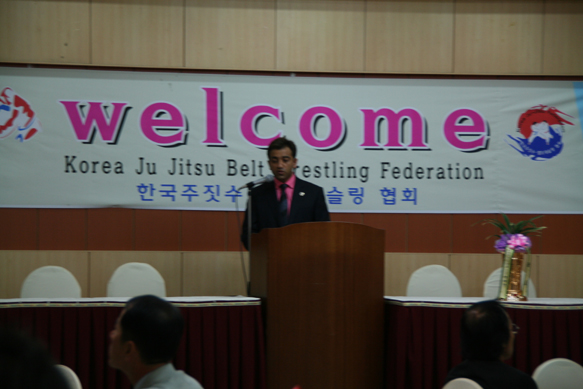
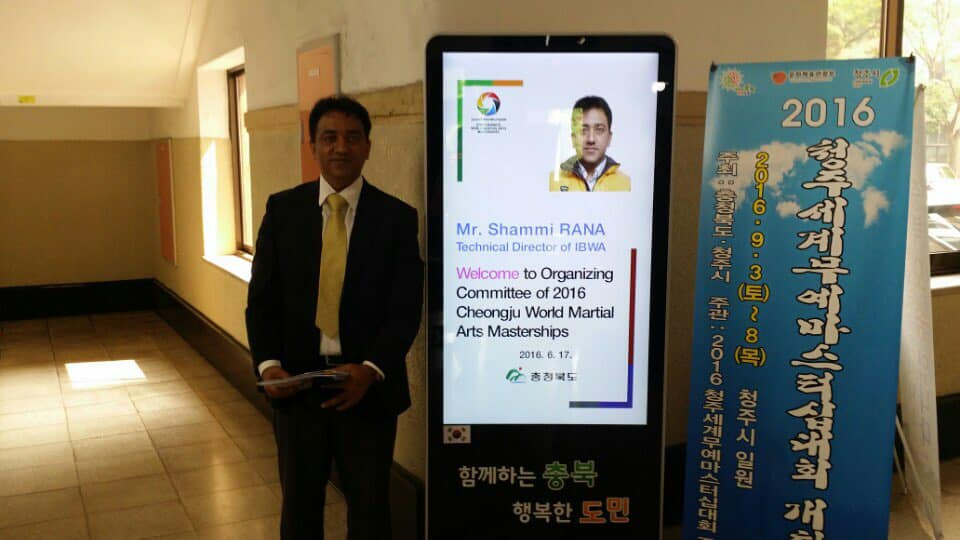
Secretary General, Asian Belt Wrestling Federation, Shammi Rana

Successful year with OCA for jujitsu26 NOV 2009With its inclusion in the first Asian Martial Arts Games in Thailand and, as a demonstration sport, in the third Asian Indoor Games in Vietnam, the sport of jujitsu enjoyed a landmark year in 2009. The general assembly of the Asian JuJitsu Belt Wrestling Federation (AJJBWF) heard that the growth of the organisation was set to continue in 2010, as new membership applications had been received from Korea, Afghanistan, Vietnam and Thailand. All four applications were approved, Thailand on the proviso that officials complete the necessary paperwork.
Looking ahead to 2010, the Al-Fajar JuJitsu Belt Wrestling Championship will be held in Tehran in February, and the federations of Iraq and Korea are both keen to host the fourth Asian Jujitsu and Belt Wrestling Championship. In addition, there are requests for training camps for referees in Singapore, Korea and India.
The president of the AJJBWF, Khalil Ahmed Khan, will decide on the venue of the fourth Asian Championship after negotiating terms and conditions with the interested federations.
In his report to the general assembly, which took place at Tashkent, Uzbekistan, President Khan highlighted the success of the second Asian Championship in 2008, the various camps and examinations for referees, the Play for Peace project and the Asian Martial Arts Games 2009.
“I would like to express my gratitude for the valuable help and cooperation of His Excellency Sheikh Ahmad Al-Fahad Al-Sabah, President of the OCA,” said Mr. Khan. “I would also like to express my sincere thanks to the technical teams of the AJJBWF.”
The honorary president, Dr. Paul G. Hoglund of Sweden, praised Mr. Khan for his hectic efforts to promote jujitsu and belt wrestling in Asia, and congratulated officials on the smooth running of the Asian Martial Arts Games in Bangkok.
“Under the leadership of Mr. Khalil Ahmed Khan, this organisation will flourish quickly,” said Dr. Hoglund.
The AJJBWF’s Director of Public Relations, Dr. Jaffer Al-Muthafer, said he was trying his best to promote jujitsu in the Gulf region and to attract new federations such as Lebanon and Saudi Arabia.
“OCA recognition and inclusion in the sports programme will surely help to get rapid membership in Asia,” said Dr. Jaffer.
The vice president, Saad A. Ani, said he had tried to help the AJJBWF by sponsoring the teams of Syria and Palestine in the last Asian Championship in Bishkek, Kyrgyzstan, and that the visit of the president to Syria had helped promote the sport in the region.
AJJBWF Executive Board for 2009-2015: President, Khalil Ahmed Khan (Pakistan); Vice President (Central Asia), Rustambek Iskov (Uzbekistan); Vice President (East Asia), Dr. Dylan Sung (Chinese Taipei); Vice President (South East Asia), Bui Hoang Lan (Vietnam); Vice President (South Asia), Sir Anthony Fernandes (India); Vice President (West Asia), Dr. Mukhlis Al Iraqi (Iraq); General Secretary, Miss Marie Anthony (India); Assistant General Secretary, Saad A. Ani (Syria); Treasurer, Joseph Tan (Singapore).
Director Sports (Jujitsu), Amir Hamsayeh (Iran); Director Sports (Belt Wrestling), Valery Fofachev (Kyrgyzstan); Director Referee (Jujitsu), Kazim Ali (Pakistan); Director Referee (Belt Wrestling), Lew Yugay (Uzbekistan); Director Public Relations, Dr. Jaffer Al-Muthafer (Iraq); Director Marketing, Shammi Rana (Korea); Chairperson Women’s Committee, Mrs. Hazarmukhamedova Tahmina (Kyrgyzstan); Chairman Coaches Committee, Ivan Raisky (Kyrgystan); Chairman Medical Committee, Dr. Henry Kothagoda (Singapore); Chairman Ethics Committee, Lee Jong Hak (Korea).
Secretary General, Asian Belt Wrestling Federation, Shammi Rana


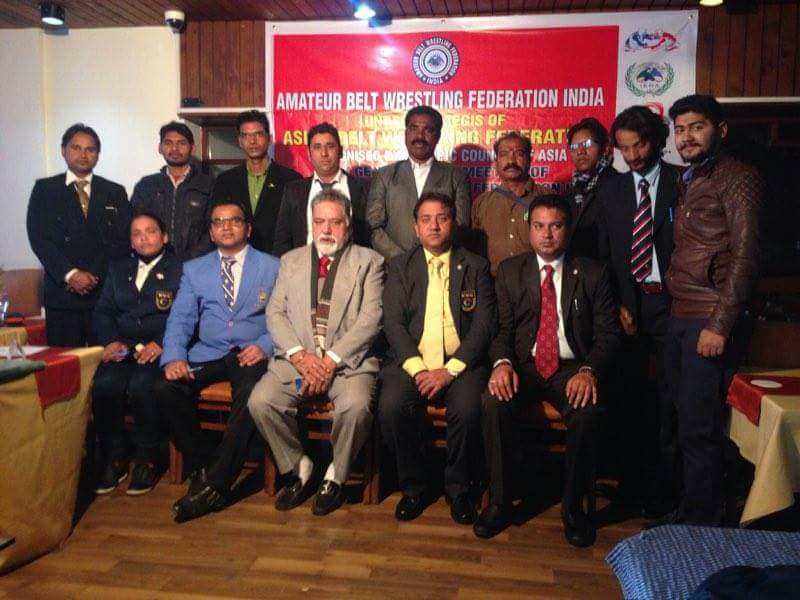
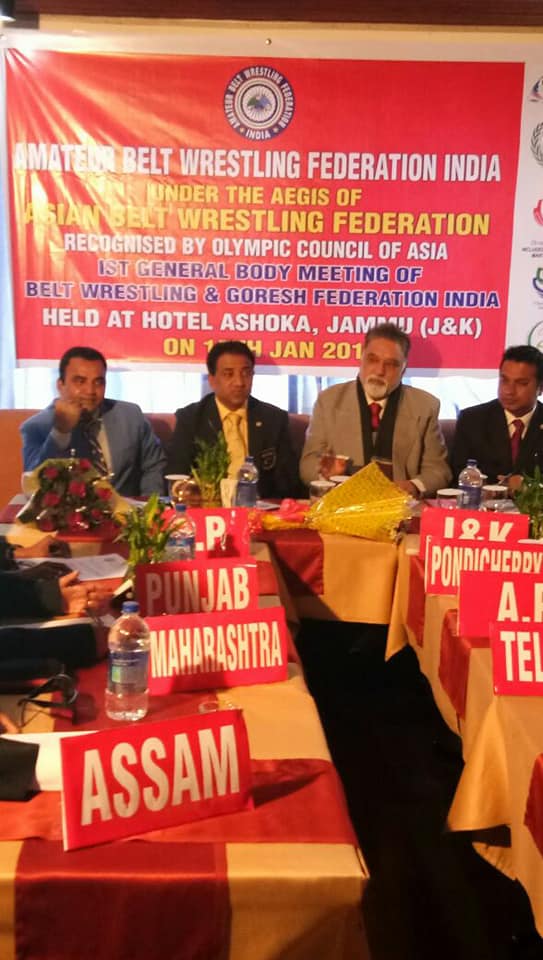
JAMMU: The Amateur Belt Wrestling Federation (India) held its first General Body meeting under the leadership of Secretary General, Tarsem Sharma and attended besides others by representatives from states of Delhi, Punjab, Telangana, Andhra Pradesh, Uttar Pradesh, J and K, Rajasthan, Assam, Puduchary and Maharastra, here on Sunday.
The meeting discussed the modalities to promote the game in India in a big way in view of inclusion of the event in the Asian Indoor Games to be held in Turmankistan in September this year.
Joint Secretary of the Indian Olympic Association (IOC) and President of J and K Handball Association, S.M Bali was special invitee, who chaired the inaugural session of the meeting. Secretary General, Asian Belt Wrestling Federation, Shammi Rana of South Korea was also present.
Speaking to the delegates from the Indian states, Secretary, Asian Belt Wrestling Federation asked S.M Bali to use his good office in the IOC to promote the game in all parts of the country in a big way.
In turn, the Joint Secretary IOC, Bali assured the Asian and Indian bodies of the Belt Wrestling that he will try his level best to get this sport (Belt Wrestling) included in IOC.
4th Collective Consultation Meeting of TSG, Traditional Games and Sports, of UNESCO, Takes Place In Istanbul, Turkey
4th Collective Consultation Meeting of TSG, Traditional Games and Sports, of UNESCO, Takes Place In Istanbul, Turkey
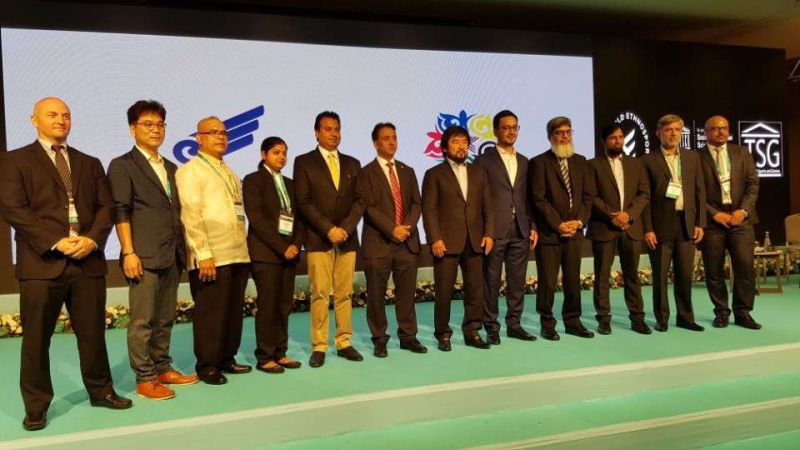 4th collective consultation meeting of Traditional Games and Sports, of UNESCO
One of the most important events of UNESCO of the year, the 4th collective consultation meeting of Traditional Games and Sports, of UNESCO, was held from August 12th to 15th in Istanbul, Turkey.
Starting the meeting off on a positive note, many prominent figures attended it including 4th Collective Consultation Meeting on Traditional Games and Sports (TSG) was attended by Turkish Youth and Sports Minister Mehmet Muharrem Kasapoğlu, Gambia’s Sports Minister Hadrammeh Sidibeh, Sri Lanka’s Sports Minister Faiszer Mustapha, Kyrgyzstan’s Sports Minister Kanat Amankulov, the Ivory Coast’s Sports Minister Paulin Danho, Serbia’s Sports Minister Vanja Udovicic, Qatar’s Culture and Sports Minister Salah Ghanem Al-Majeed,Michael Mustapha Director of Sports Sierra Leone.
Further, important chair people from UNESCO were also present at the meeting. These included Marcellin Dally, the TSG UNESCO TSG Coordinator, Khalil Ahmed Khan, the Chairman Adhoc Advisory Committee TSG, Bilal Erdogan and Mr. Shammi Rana, the rapporteur for the Adhoc Advisory Committee TSG, UNESCO.
The platform was HUGE and it had one agenda: To include traditional sports in the daily sports culture of countries.
Previously, it was reported that Mr. Shammi Rana met with two Canadian parliamentarians to push his agenda of TSG. Mr. Shammi, even then, had positive outcomes from the meeting.
Large Scale Event
The latest event was a big one and Turkish Premier Erdogan thanked the participants for flying to Istanbul for the event.
Bilal Erdogan reaffirmed that it is not just Turkey but countries around the world that are trying to push forward the agenda of inclusion of traditional sports in the country’s economic curriculum. He was of the opinion that local authorities should ensure they are spending their efforts on promoting local sports in the country.
The Role Of Mr. Shammi Rana And Mr. Khalil Ahmed
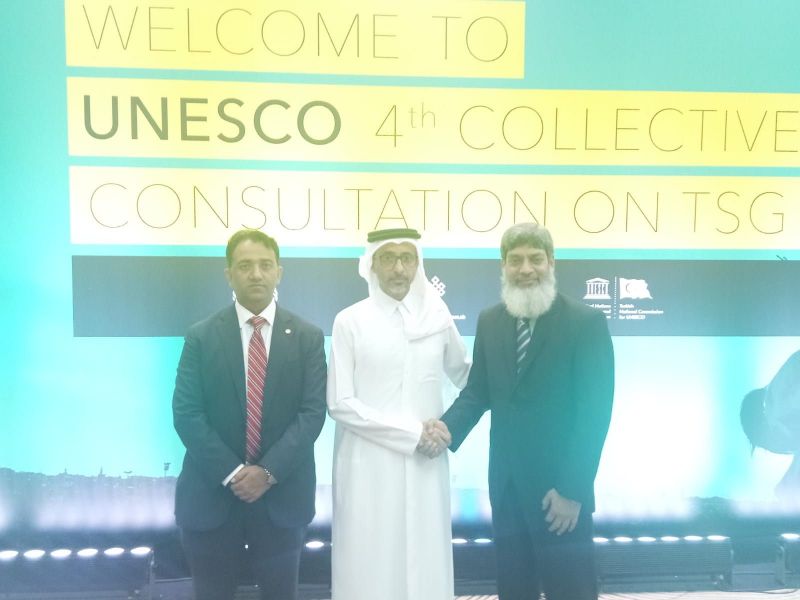 Qatar’s Culture and Sports Minister H E Salah Ghanem Al-Majeed with Chairman and Rapporteur of AAC TSG UNESCO
It is interesting to note that on the side, Mr. Shammi Rana, the rapporteur of UNESCO Committee on Traditional Sports and Games, Salah Bin Ghanem Bin Nasser Al-Ali and Khalil Ahmed Khan, Chairman UNESCO Traditional Sports and Games committee, had a separate meeting where they discussed Qatar’s role in traditional sports. That has also given way to a lot of question marks.
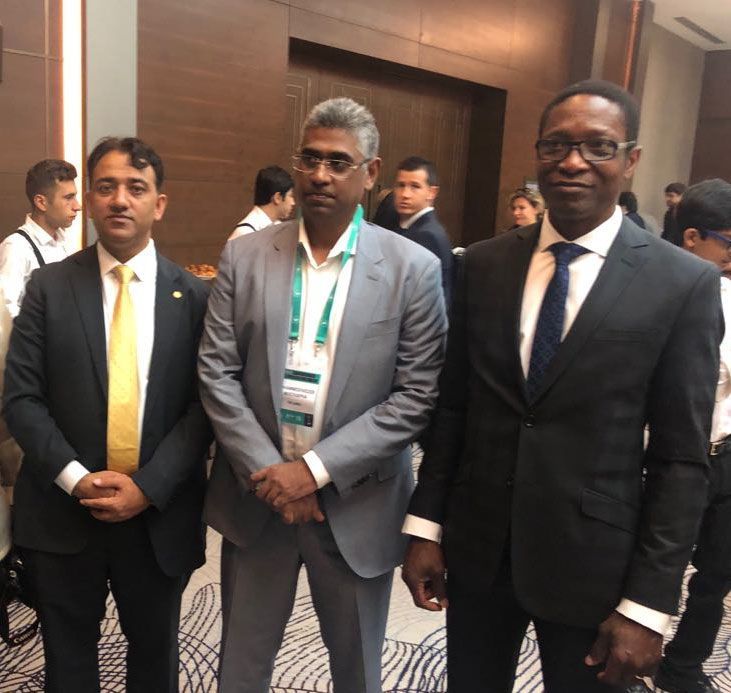 Sri Lanka’s Sports Minister Faiszer Mustaphar withMr.Shammi Rana
For now, one of the key takeaways from the event is also that Sri Lanka’s Sports Minister reaffirmed the Chairman UNESCO on Traditional Sports and Games, Khalil Ahmed Khan, on traditional games and expressed an interest to host South Asia’s TSG activity. Their minister also showed interest in leading South Asia from the front.
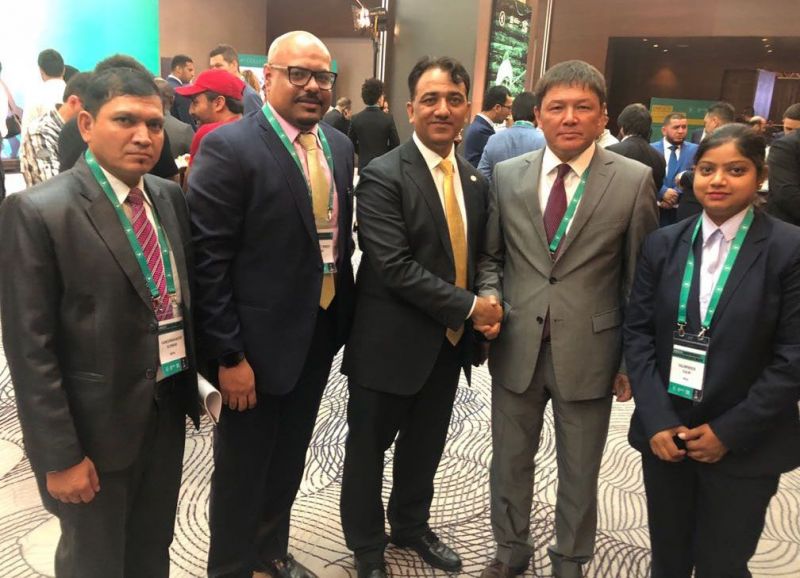 Kyrgyzstan’s Sports Minister Kanat Amankulov withMr.Shammi Rana
Mr. Shammi Rana, along with Khalil Ahmed Khan, Chairman of UNESCO Traditional Sports and Games was also invited by the sports minister of Kyrgyzstan to the World Nomad Games due to take place in Kyrgyzstan.
It might leave you hanging to assess which shape things might take as far as sports is concerned. However, there is still some progress and enthusiasm for the inclusion of traditional games in a country’s regimen.
The most important takeaways from the meetings show that all countries want to collaborate and have an inclusive policy towards involving local games in their sports curriculum.
Mr. Khalil Ahmed and Mr. Shammi Rana also remained the most important names in these meetings.
Establish Pan-America Traditional Sports and Games HQ in Delano, emphasises Hari Banaag


Establish Pan-America Traditional Sports and Games HQ in Delano, emphasises Hari Banaag
Shammi Rana, rapporteur for UNESCO’s Traditional Sports and Games (TSG), and Hari Banaag met with US representatives in California to discuss promoting traditional sports and games.
Recently, a meeting was held in Delano, California, between high-profile members of UNESCO (including Mr. Shammi Rana, rapporteur of Traditional Sports and Games, along with Mr. Hari, a member of the Advisory Committee of Traditional Sports and Games) and Terrance John Cox – U.S Representative from California’s 21st Congressional district – along with Mr. Joe Aguirre, Mayor of Delano, USA.
Mr. Shammi Rana has been the pinnacle of sports promotion, which has landed him the USA martial arts Hall of Fame award. Not long ago, he was honored with an Honorary Doctorate of Martial Arts Philosophy and Martial Arts Science by the University of Asian Martial Arts Studies, in May 2019.
Mr. Shammi Rana, who was appointed rapporteur of the Advisory Committee of Traditional Sports and Games, in 2017, has held memberships in 10 martial arts organisations in Asia. For over 20 years, he has worked with several state VIPs to advance sports to the next level.
As a part of internationally governing associations, Mr. Shammi Rana, vice president of the International Association of Traditional Wrestling Sports highlighted on promoting Korean martial arts in none other than his hometown of Punjab.
His influence as a promoter of sports has been recognised globally, owing to his professional career and tireless efforts.
In the meeting that took place in Delano, Mr. Hari Osias Banaag, the president of Global Sikaran Federation raised his concern with the Congressman Terrance John Cox, a politician in the U.S. and a member of Democratic Party, on establishing a pan-America Traditional Sports and Games HQ in Delano, CA.
Mr. Hari further added that a pan-America Traditional Sports and Games HQ would bring Delano on the world map.
Mr. Hari Osias Banaag is a US-based Filipino Grandmaster of martial arts who is determined to take Filipino sport to its highest level. His motivation for this sport comes from his father, as Mr. Hari established his own martial arts school by the name of Foremost Sikaran Brotherhood in 1976. He is inspired to get Filipino sport the global recognition it deserves.
The meeting in Delano unveiled Mr. Hari’s desire to host the UNESCO Traditional Sports and Games meeting with the support of Mr. Joe Aguirre, Mayor of Delano. Both the parties reached an agreement to discuss the matter in detail in another meeting.
Mr. Hari and Mr. Shammi Rana briefed Terrance John Cox and Mr. Joe Aguirre about the collaboration of Council of Ministers of Central America (CECC/SICA) with the Advisory Committee on Traditional Sports and Games (TSG).
Terrance John Cox, an MBA graduate, and a successful businessman started his journey for the United States House of Representatives back in 2006. His triumph was not before the 2018 elections, where he became a sound member of the Democratic Party in California’s 21st congressional district.
It was further added in the meeting by the members of the Advisory Committee of TSG, that the Mexican and Canadian government along with their ministers and representatives are keen to join hands with TSG.
UNESCO works as an implementation agency of the United Nation (UN) and is responsible for the growth of sports in the Pan-American region with possible support of the US government.
UNESCO is taking every possible measure to spur traditional sports and games on a global level while Mr. Shammi Rana along with other members of UNESCO, demonstrate exceptional profile-raising skills in order to attract presidents and ministers for the common cause of promoting UNESCO objectives.
Amritsar, India born Shammi Rana appointed as the new Secretary-General for the International Council of Traditional Sports and Games (ICTSG).
 Amritsar, India born Shammi Rana appointed as the new Secretary-General for the International Council of Traditional Sports and Games (ICTSG). Together, Khan and Rana will assist the Council with being an official umbrella organization for all (Traditional Sports and Indigenous Games) as well as organizers of traditional-sports games and sport-related international associations. The ICTSG, according to Mr.Shammi Rana, to help all concerned and interested governmental and non-governmental national, regional and international organizations in the harmonization and coordination of efforts and capacity in view of providing guidance, counseling; and to sustain 17 initiatives and programs that pertain to traditional sports and games for policy-makers, stakeholders and concerned parties. Mr. Shammi Rana further added that Traditional sports and games (TSG) must be presented at local, national and regional international festivals/events with high publicity to strengthen the awareness of their values, significance, and importance.TSG should be incorporated, introduced and promoted in the work of schools, communities, institutions, and organizations both governmental and non-governmental.
Mr. Rana brings with him a tremendous amount of experience, who has more than 20 years of promoting experience at the top levels of sports has worked with state dignitaries around the world to promote political, social and diplomatic relations at the highest levels of government.
The traditional sports and games (TSG) contribute to a life of mutual understanding and peaceful behavior among different cultural and social groups, communities and nations. They are means of their identity. Therefore, the significance of traditional sports and games must be strengthened and the opportunity for practicing them must be held open for all human beings especially for young people, physically challenged and disadvantaged groups in society.
Traditional sports and games have their regulations and standards with no need for globalization or standardization. For their further development, due attention should be given on their values, originality, and the needs of those practicing them. They should be protected from any kind of commercialization that affects the cultural heritage and values of traditional sports and games. Traditional sports and games while not needing expensive facilities and equipment should be promoted in all parts of the world, especially where the resources are low. Traditional sports and games, which did not suffer extensive commercialization and doping manipulation, could be used for promoting the morale and spirit of fair play. Traditional sports and games could be an effective tool for the promotion of tolerance, mutual understanding, respect, and peace in a culturally diverse society.
The role, which traditional sports and games can play in the realization of this fundamental right had to be carried out and must be increasingly used. The different native cultures in the world have brought out a diversity of traditional sports and games. They are expressions of the richness of a nation’s culture. It is a serious star to preserve and promote the practicing of this diversity. A lot of traditional sports and games belong to the national, regional or worldwide cultural heritage. It is necessary to strengthen the acknowledgment of traditional sports and games.
Traditional sports and games could be modernized and adapted cautiously according to the needs of the living generation without affecting their originality. This process must be not misused by touristic interest. Traditional sports and games, as well as indigenous sports, have to be adopted or implemented in recognized sports programs like “Sport for Peace” or “Sport and Health” to promote their popularity and survival sports. Traditional sports and games have to change in a cautious manner in view of the progress of civilization and must be made fit for the exchange of sport within the different cultures.
The mass media are required to present and promote traditional sports and games in an appropriate manner, given their importance and values. Traditional sports and games contribute to the world heritage of sports culture. Research, preservation, and promotion of traditional sports and games must be at the center of a global policy on culture and sport. The research into traditional sports and games and their contribution to the knowledge of the various cultures and mankind must be intensified, broadened out and supported by governmental and non-governmental organizations. The effort to conserve dying and bring back lost traditional and indigenous sports and games for the future generation by museum presentation has to be supported.
Safeguarding and promoting Traditional Sport and Games (TSG) requires developing knowledge, sharing information and raising awareness on its intangible heritage. Traditional sports and games have, for decades, faced a paradox: there is a renewed interest in TSG at national, regional and international levels but this is not concordant with its apparent marginalization. The increased professionalization and commercialization of sports, then a corresponding shift in values that they encompass, the global preponderance of certain sporting activities and the neglect of physical education systems are important challenges contrasting with the status quo on the development of traditional sports and games. With this in mind,
UNESCO’s work focuses on advocacy aiming to safeguard, promote and develop TSG, and to ensure that they form an integral part of national and international cultural development.
Traditional Sports and Games, the challenge for the future
In 1999, following the Third International Conference of Ministers and High Authorities of Physical Education and Sport (MINEPS III), the Declaration of Punta del Este called on governments to engage in the safeguarding of traditional sports and advocated the development of a worldwide list of traditional games and sports. The designated working group of the Intergovernmental Committee (CIGEPS) elaborated a draft charter and a draft list for Physical Education and Sport.
In this regard, two important proposals have been made during MINEPS III. One of them is the publication of a world heritage list of traditional games and sports and the other the implementation of an incentive framework for the promotion and the preservation of these sports that should lead to the establishment of an “International Platform” for traditional games and sports.
Later in 2003, as a purpose of reviewing follow-up measures of MINEPS III, the ministers of representative countries asked for a round-table conference to the President at the 31st session of UNESCO”s General Conference. MINEPS VI highlighted the importance of traditional sports and games and recommended concrete provisions for its promotion and development. The 33rd session of UNESCO’s General Conference drew on these recommendations to design the Organization’s strategies regarding traditional sports and games.
The Director-General then presented it at the 33rd session of the General Conference in 2005, where the Member States were invited to take the necessary steps to preserve and protect the TSG. A draft Charter of Traditional Games and Sports was further deliberated upon and was followed by Resolution 21 on the desirability and scope of an international charter on traditional games and sports.
As a result, the Resolution 33C/R21 enabled the organization of UNESCO convened First Collective Consultation meeting at UNESCO’s headquarters-Paris, on 13 March 2006, with the participation of UNESCO Member States, Ministers, experts and other relevant stakeholders aimed at creating an international platform for the promotion and development of traditional sports and games. In this meeting, a concrete roadmap and an agenda for action were adopted.
2nd Collective Consultation Meeting on the promotion of Traditional Sports and Games (TSG) was held in Tehran (the Islamic Republic of Iran) from 16 to 20 January 2009, during which experts notably developed the following definitional framework:
“Traditional sport and games are motor activities of leisure and recreation which can have a ritual character. They are part of the universal heritage diversity. They are practiced in an individual or collective manner, deriving from regional or local identity; they are based on rules accepted by a group that organizes competitive or non-competitive activities. Traditional sport and games dispose of a popular character in their practice and their organization, yet if turned into sport tend to be uniform and institutionalized. The practice of traditional and games promote global health.”
UNESCO convened this collective Consultation aimed at creating an International Platform for the promotion and development of traditional sports and games. This platform was envisaged as a “formal umbrella organization specifically concerned with TSG” that could become an “International Council on TSG”7. The meeting aimed to build momentum on the outcomes of MINEPS IV (held in Athens in 2004) and Resolution 33 C/R.21.
This Collective consultation also facilitated the following conclusions:
UNESCO representatives invited all participants to join UNESCO’s Network on TSG;
The Islamic The Republic of Iran offered to host the International Martial Arts Festival;
The experts proposed an official definition of traditional sports and games.
After some gap in between, UNESCO re-started its efforts in the year 2015 and decided the strategic approach focuses on the following three objectives:
- elaboration of Policy Guidelines on Traditional Sports and Games essentially based on the provisions of the draft Charter of 2005;
- establishment of an International Platform on Traditional Sports and Games;
- updating of the World Sports Encyclopedia and the development of an Online Worldwide Encyclopedia.
It was also decided with the partner organization International Association of Traditional Wrestling Sports (IATWS) which was a sole contributor by giving Financial Assistance as an Extra Budgetary Fund to UNESCO for purpose and also agreed that work will be carried out in three phases:
- Phase I – Preparatory Phase (July-November 2017)
- Phase II – Consolidation Phase (December 2017- November 2018);
- Phase III – Deepening Phase (December 2018 – ∞).
Attempting to revitalize the program on the safeguarding and promotion of Traditional Sports and Games, a 3rd Collective Consultation Meeting on Traditional Sports and Games (TSG) was held at UNESCO Headquarters in Paris from 6 to 7 July 2017. This consultation also gathered experts from sports federations and associations, academics, representatives of the Member States of UNESCO and non-governmental organizations wherein participants adopted an action plan/roadmap for the years 2017 and 2018 in order to formalize the following actions:
- Elaboration of Policy Guidelines on TSG on the basis of the draft Charter;
- Establishment of an international Platform on TSG;
- Development of an Online Worldwide Encyclopaedia on the ground of the 2003 World Sports Encyclopaedia.
As a core the outcome of the 3rd collective consultation, the Ad Hoc Advisory Committee for the safeguarding and promotion of Traditional Sports and Games (AAC) was established by UNESCO and Mr. Khalil Ahmed Khan, President of IATWS was unanimously elected as the chairperson of the Ad Hoc Advisory Committee Traditional Sports and Games, UNESCO (TSG) and Mr. Shammi Rana appointed as Rapporteur of Ad Hoc Advisory Committee Traditional Sports and Games, UNESCO(TSG).
They then separated into four Ad Hoc Working Groups; these are respectively responsible, for drafting Guidelines, establishing the International Platform, publishing the online Encyclopedia and supervising the management of human and financial resources. Their composition remained open-ended in the hope of becoming more representative until the fourth Collective Consultation.
The 4th Collective Consultation Meeting on the Safeguarding and Promotion of TSG organized by Ad Hoc Advisory Committee Traditional Sports and Games, UNESCO(TSG) which took place on 13 and 14 August 2018, in Istanbul, Turkey in collaboration with the Government of Turkey. The Consultation brought together Ministers and representatives of UNESCO Member States, representatives of the Group of Friends of UNESCO TSG as well as non-governmental organizations, experts from sports federations, associations and the field of academics, with the aim of further developing the program on the safeguarding and promotion of traditional sports and games. Strategic development of the program was discussed, including the International Council on TSG (ICTSG)
4th Collective Consultation Meeting on TSG was attended by more than 80 participants from 40 countries including Sports Ministers, government officials, representatives of UNESCO Permanent Delegations and international organizations.
The draft statutes of the ‘International Council of Traditional Sports and Games (ICTSG)’ were presented before the participants and the establishment of ICTSG as the international platform tasked with ensuring the safeguarding and promotion of TSG whilst aiming to support and assist governments and NGOs, as well as the Sport Movement at national, regional and international levels through harmonization, coordination of efforts, guidance, and advice, was agreed to in principle.
Participants then deliberated upon the strategy to be undertaken in leveraging the international the platform, with the support of the Working Group entrusted with the establishment of the International Platform on TSG, and it was unanimously upheld that UNESCO and AAC shall make use of the experience of various Permanent Delegations involved in the TSG Project for discussions on progressing the strategy of ICTSG. which objectives and functions of the ICTSG and it was decided that the detailed draft Statutes shall be circulated for feedback so as to incorporate all aspects relevant to the future operation of the ICTSG.
The TSG project is now being supervised by the international platform – International Council of Traditional Sports and Games (ICTSG), continuing the work of the ad hoc Advisory Committee of UNESCO, established in order to control and promote the Traditional Sports and Games around the globe.
The Role of ICTSG:
International Council of Traditional Sports and Games (ICTSG) is the official umbrella organization for all (Traditional Sports and Indigenous Games) as well as organizers of traditional-sports games and sport-related international associations.
Its core objectives are, inter alia, to help all concerned and interested governmental and non-governmental national, regional and international organizations in the harmonization and coordination of efforts and capacity in view of providing guidance, counseling and to sustain17 initiatives and programs that pertain to traditional sports and games for policy-makers, stakeholders and other concerned parties.
ICTSG‟s initiative to organize TSG Events is part of the program for the Safeguarding and Promotion of TSG which aims to ensure that traditional sports and games form an integral part of cultural development on a multilayer the approach thus reinforcing the implementation of United Nation‟s Sustainable Development Goals 2030.
ICTSG will also, be the sole controller and proprietor of the “World Traditional Sports and Games” which will be attended by teams from all the Member States of the United Nations and ICTSG.
The mission of the Council is to contribute to the promotion and development of TSG, as a distinct and different category to modern sports, and facilitate the promotion and understanding of TSG as cultural identity and diversity in view of achieving sport for peace in the context of achieving Education for All (EFA) and the Sustainable Development Goals (SDGs) of the United Nations;
In consequence, its key functions are to ensure priority towards advocacy and raising awareness about the challenges and plights that demand decisions, actions, and tangible measures in different geographical, cultural and educational contexts. This will help share know-how, knowledge, information, and data related to TSG at different levels of incentive and normative needs or initiatives that can contribute to improving the development and promotion of TSG at local, national, regional and international levels.
The ICTSG further aims to undertake endeavors advocating and raising awareness in relation to the cultural diversity and respect of cultural identity within the context of new issues and challenges in a globalized world, where values, knowledge, skills, and behavior are in constant change.
The International Council of Traditional Sports and Games (ICTSG) is an international organization aiming to serve as an international platform for the preservation, promotion, and development of traditional sport and games (TSG) at the global level.
Projects of ICTSG
World Traditional Sports and Games
World Traditional Sports and Games is one of the projects being supervised by the ICTSG. It is the initiative of the UNESCO Advisory Committee and approved by UNESCO. These Games will be the first of their kind whilst giving a boost to tourism, local traditions, and culture of its Host Country.
Anti-Doping in Traditional sports
In today’s highly competitive sporting environment, athletes and athlete support personnel is under increasing pressure to do whatever it takes to win. ICTSG and UNESCO Convention against Doping in Sport are committed to preserve fair sport and to protect young people involved in traditional sports from the use of prohibited substances.
Gender equality through Traditional sports
Promoting gender equality and empowering women through traditional sports and games are one of ICTSG’s main objectives.
 International Traditional Sports Day
“International Traditional Sports Day” One of the most important events of the International Council of Traditional Sports and Games was held on 14th August, and 15th August virtually. It was attended by more than 450 participants from 85 countries including Sports Ministers, government officials, representatives of UNESCO, Intergovernmental Committee for Physical Education and Sport (CIGEPS), Permanent Delegations, ILO, The United Nations Office of Counter-Terrorism (UNOCT), Researcher, International Organizations, and Indigenous Groups around the world. International day of Traditional Sports and Games Day Conference ICTSG and its Member States through their respective ministries after having Consultation Meetings agreed to enhance the diffusion of TSG knowledge and declared 14th August as “INTERNATIONAL TRADITIONAL SPORTS DAY”. In this regard, events held in every country under the umbrella of the Council to highlight and promote their local traditional sports and games and historical culture which were portrayed globally through the platform of ICTSG virtually due to Covid19 restrictions ICTSG hosts the General Conference on Traditional Sports in virtually four sessions.
I)Ministerial Session
II) Ambassadors/NATCOM Session
III) Gender Equality and Women empowerment through TSG
IV)Revival & Development of TSG at the National levelInternational day of Traditional Sports and Games Day Conference
Many prominent figures attended the meeting of the 4th Collective Consultation Meeting of TSG, Traditional Games and Sports (TSG) including UNESCO international experts, Marceline Dally, secretary of the International Convention against Doping in Sport, Khalil Khan President ICTSG, Shammi Rana Secretary General ICTSG, Philipp Muller-Wirth Executive Officer for Sport and Youth Section Sector for Social and Human Sciences UNESCO, Rosa Rakotozafy, Chairperson Intergovernmental Committee for Physical Education and Sport (CIGEPS), Joel Bouzou, Ambassador-at-Large ICTSG, President and Founder of Peace and Sport, Valerio De Divitiis, Coordinator, Global Sports Programme of the United Nations of Counter-Terrorism (UNOCT), Viktoria Racheva Slavkova, Director of European Programs, Projects and International Cooperation, Ministry of Youth and Sports of Bulgaria, Mr. Giovanni Di Cola, Special Adviser Member Executive Board, PCTSG DDG/FOP of International Labor Organization (ILO), Mohammed Hamimaz, Sports Director of the Ministry of Culture, Youth and Sports of Morocco, Jamshidbek Khasanov, Head of Department, Ministry of Tourism and Sports of Uzbekistan, Destar Zeogar Wilson, Minister of Youth and Sports of Liberia, Richo Padhi Vice President Indian Olympic Association, Sarjit Singh Sekhon, Raj Rathore, Mr. Aman Kumar Sharma, Member Advisory Committee ICTSG, Prof Ravi Sahu, Harpal Singh, Parveen Garg, Tarsem Sharma.
Michael Wood, Minister of Transport, Minister for Workplace Relations and Safety, Deputy Leader of the House, New Zealand said,” I wanted to take this opportunity to say congratulations to the organizers of the International Traditional Sports and Games Day for putting together such a tremendous celebration of culture and sport. To see so many countries participate, you wouldn’t believe it is possible in times like these. This event offers a platform to audiences and stakeholders around the world who wish to participate in the day either physically or virtually. My best wishes for a wonderful day to the organizers and participants.”
I am happy to know that August 14th has been declared as the International traditional Sports and Games Day. This will provide an opportunity for all TSG stakeholders to organize physical and virtual activities,” said Rajnath Singh, Defence Minister, Government of India
The International Council of Traditional Sports and Games, or ICTSG, is the official umbrella organization for all traditional sports and indigenous games, as well as organizers of traditional sports games and sport-related international associations. It also facilitates the understanding of TSG in terms of cultural identity and diversity. It gives exposure to opportunities that mainstream sports can’t provide.International day of Traditional Sports Day
On 14th August 2017, the 4th Collective Consultation Meeting on Traditional Sports and Games was held by UNESCO in Istanbul, Turkey. During that meeting, The International Council of Traditional Sports and Games was established to revive and safeguard traditional sports and games. Part of ICTSG’s mission is to contribute to the promotion and development of TSG, as a distinct and different category to modern sports and to encourage and support activities blending traditional and indigenous sport with culture and education.
Recreation of Traditional Games & Sports in Philippines
 Shammi Rana and Hari Osias Banaag with Congressman T J Cox
The Philippines, Mar. 2 (Punjab Post Bureau) – Government of Philippines along with Mr. Hari Oasis Banaag PUNJ0203201917 member Advisory Committee traditional sports and games, UNESCO and Mr. Shammi Rana Rapporteur Advisory Committee traditional sports and games, UNESCO to advocate the concept of UNESCO on traditional sports and games. Both hon’ble members welcomed By Philippine Global Sikaran federation and Philippine traditional sports community at Manilla airport.
Mr. Shammi Rana and Mr. Hari Banaag were honored by World City College Antipolo city. The guests were awarded in the recognition of their support and commitment towards the advancement of traditional sports and games. In their brief discussions, traditional sports and games have been included in the upcoming festival of Hane festival at Tanay city, Maytime festival at Antipolo City. Taguig City Festival at Taguig City of Philippines and members were assured by Mayors of City council for all kind of possible support the promotion of Traditional Sports and Games in the region. Mayor of Antipolo City Hon. Casimiro Recreation of Traditional Games & Sports in the Philippines Jun Ynares III shows interest to host an event of UNESCO TSG in the Rizal province. Cainta Vice Mayor Pia Shuck Velasco also met the TSG delegation and shows commitment to the promotion of TSG in the region.
The UNITED NATIONS Educational, scientific, and cultural organization is a member of the United Nations Development group. This group aims to contribute to the building of peace, the eradication of poverty, sustainable development, and intercultural dialogue through education, culture, sports, etc. Their intention is also to safeguarding and promoting traditional sports and games as well as to enhance intercultural dialogue and peace, reinforce youth empowerment, promote ethical sports practices, and provide opportunities for traditional sports.
 Shammi Rana and Hari Osias Banaag with boxing legend and politician, Emmanuel “Manny” Dapidran Pacquiao. Manny” Pacquiao
Filipinos are known to be lovers of sports and many have carved their names in the international sports scene. Think of Manny Pacquiao, one of the world’s greatest boxers, and chess grandmaster Wesley So. But aside from boxing, basketball, chess, swimming, and others, Filipinos are also fond of their homegrown sports. Some of them are as under:Arnis (Eskrima) – The Philippine version of martial arts is Arnis. Dubbed the country’s national sport, arnis is a weapon-based form of combat used for fighting since 1610. Due to the country’s diverse local dialects, is it also known as Eskrima among other names.
Sikaran -This martial arts sport, which has been around since the 16th century in Rizal, Philippines, uses feet rather than hands. One distinct technique in sikaran is the “Biakid kick” move which aims to hit the back of the opponent’s head. Sikaran a Filipino Traditional Martial Arts and Sikaran will be part of 2021 World UNESCO TSG Games in Astana Kazakhstan and 2020 Nomad games Turkey.
Sipa, or “to kick” is a native sport that is closely related to Sepak Takraw of Indonesia. The game is undertaken with two teams opposing each other, with a net in the middle of a court. The goal is to kick a rattan ball back and forth until it lands on the floor of the opponent’s side.
Dumog – Traditional wrestling in the Philippines is called dumog. Combining Filipino martial arts techniques, the aim in dumog is to pin an opponent to the ground. Strategies include pulling, grabbing, pushing, and pinning the opponent down by targeting the body parts they use for control.
Palo-Sebo is a common sport played by locals. It features greasy poles, usually made up of bamboo, with a bag of prizes pinned on top of it. The aim is to climb the greasy pole and whoever gets the prize in the quickest time is the winner of the game.
Sungka – is a game for two, played using a wooden block with 16 holes that can hold pieces of pebbles, marbles, or seeds. Two of the holes (called ‘heads’) remain empty, each player protects their own ‘head’. Recreation of Traditional Games & Sports in the Philippines. The goal is to gather as many pebbles etc in their ‘head’ as the player can in order to win the game.
Shammi Rana has been appointed Secretary-General, International Council of Traditional Sports and Games (ICTSG)

Rana has been appointed Secretary-General, International Council of Traditional Sports and Games (ICTSG)
Shammi Rana has been appointed Secretary-General, International Council of Traditional Sports and Games (ICTSG). The goal of the International Council of Traditional Sports and Games is to assist governmental and non-governmental organizations in organizing and promoting traditional sports and games and official umbrella organization for Traditional Sports and Indigenous Games as well as organizers of traditional sports games and traditional sports-related international associations throughout the World.
In 2017, Rana was appointed as rapporteur of the UNESCO Traditional Sports and Games Ad Hoc Advisory Committee by the United Nations Educational, Scientific, and Cultural Organization, In his UNESCO role, Rana promotes the mission of Traditional Sports and Games.
UNESCO supports Traditional Sports and Games as a vehicle to broaden intercultural awareness, enable youth development, advance ethical sports practices, and feature indigenous cultural practices around the world. That responsibility fits into UNESCO’s broader mission of building peace, eradicating poverty, promoting sustainable development, and encouraging intercultural dialogue through education, the sciences, and cultural development.
Rana, who has more than 20 years of promoting experience at the top levels of professional sports has worked with state dignitaries around the world to promote political, social and diplomatic relations at the highest levels of government.
Rana added: “My goal will be to protect traditional sports and games from the kind of commercialization that negatively affects the cultural heritage and core values of traditional sports and games. I believe that traditional sports and games should be promoted in all parts of the world, especially where the resources are low.”
Shammi Rana concluded, “Traditional sports and games should be a tool for promoting tolerance, mutual understanding, respect, cultural diversity, and peace.”

What are Traditional sports and games?
In the purest sense, they are traditional sports and games of our culture, from dancing to ball games to water sports. But they are much more than that. TSG is an important part of our history and helps us and our diverse cultures who we are today. TSG tells the story of our past, transcending gender, generational and individual differences, which is impossible for anything else. At its core, TSG is localized and regional and should be seen as the necessary counterpart to today’s globalized mass sports and culture, on par with language, music, literature, and architecture. TSG is an opportunity to enjoy diversity and community in an increasingly globalized world.
Traditional sports and competitions provide unique opportunities that conventional sports may not have. They are generally based on fun and participation rather than competition and connect more important things beyond sports and physical activities.
These two elements are very important in reaching people who may not participate in mainstream sports, especially in providing positive sports and physical activity experiences for children.
Why International Council of Traditional Sports and Games (ICTSG) hosted TSG on 14 August 2021?
The International Council of Traditional Sports and Games (ICTSG) is the official umbrella organization for all traditional sports and games and the organizer of traditional sports games and international sports-related associations. Hence, ICTSP declares 14, August as the international day of TSG.
The main objective is to help all relevant and interested governmental and non-governmental countries and regional and international organizations coordinate their efforts and capacities to provide guidance, advice, and sustain related initiatives and programs with tradition. Sports and games for policymakers, stakeholders, and other stakeholders.
The ICTSG’s initiative to organize TSG activities is part of the plan to protect and promote the TSG, which aims to ensure that traditional sports and games become an integral part of cultural development in a multi-level manner.
The mission of the ICTSG is to promote and develop TSG as a category distinct from modern sports and promote the understanding of TSG as a cultural identity and diversity.
Therefore, its main function is to prioritize promoting and raising awareness about the challenges and dilemmas that require decision-making, actions, and practical measures in different geographical, cultural, and educational contexts. In addition, it will help share TSG-related knowledge, knowledge, information, and data on different levels of incentives and regulatory needs or initiatives, thus helping to promote TSG development and promotion at the local, national, regional, and international levels.
The ICTSG is also committed to promoting and raising awareness of cultural diversity and respect for cultural identity in a globalized world where values, knowledge, skills and behaviors are constantly changing in the context of new problems and new challenges.
What are the aims of ICTSG by organizing TSG and declaring 14 August as the international day for celebrating TSG?
The Traditional Sports Games is one of the projects overseen by ICTSG. It is an initiative of the UNESCO Advisory Council and approved by UNESCO. These games will be the first of their kind while promoting tourism, local traditions, and the host country’s culture.
Anti-Doping in Traditional Sports
In today’s highly competitive sports environment, athletes and athlete support personnel are under increasing pressure to win at all costs. The ICTSG and the UNESCO Convention against Doping in Sport are committed to maintaining fair sports and protecting young people who participate in traditional sports from illegal drugs.
“International Traditional Sports Day” One of the most important events of the International Council of Traditional Sports and Games held in the month of August virtually. It was attended by more than 600 participants from 90 countries including Sports Ministers, government officials, representatives of UNESCO, Intergovernmental Committee for Physical Education and Sport (CIGEPS), Permanent Delegations, ILO, The United Nations Office of Counter-Terrorism (UNOCT), Researcher, International Organizations, and Indigenous Groups around the world.
ICTSG and its Member States through their respective ministries after having Consultation Meetings agreed to enhance the diffusion of TSG knowledge and declared 14th August as “INTERNATIONAL TRADITIONAL SPORTS DAY”. In this regard, events held in every country under the umbrella of the Council to highlight and promote their local traditional sports and games and historical culture which was portrayed globally through the platform of ICTSG virtually due to Covid19 restrictions
ICTSG hosts the General Conference on Traditional Sports in virtually four sessions.
I)Ministerial Session
II) Ambassadors/NATCOM Session
III) Gender Equality and Women empowerment through TSG
IV)Revival & Development of TSG at the National level
Many prominent figures attended the meeting of the 4th Collective Consultation Meeting of TSG, Traditional Games and Sports (TSG) including UNESCO international experts, Marceline Dally, secretary of the International Convention against Doping in Sport, Khalil Khan President ICTSG, Shammi Rana Secretary-General ICTSG, Philipp Muller-Wirth Executive Officer for Sport and Youth Section Sector for Social and Human Sciences UNESCO, Rosa Rakotozafy, Chairperson Intergovernmental Committee for Physical Education and Sport (CIGEPS), Joel Bouzou, Ambassador-at-Large ICTSG, President and Founder of Peace and Sport, Valerio De Divitiis, Coordinator, Global Sports Programme of the United Nations of Counter-Terrorism (UNOCT), Viktoria Racheva Slavkova, Director of European Programs, Projects and International Cooperation, Ministry of Youth and Sports of Bulgaria, Mr. Giovanni Di Cola, Special Adviser Member Executive Board, PCTSG DDG/FOP of International Labor Organization (ILO), Mohammed Hamimaz, Sports Director of the Ministry of Culture, Youth, and Sports of Morocco, Jamshidbek Khasanov, Head of Department, Ministry of Tourism and Sports of Uzbekistan, Destar Zeogar Wilson, Minister of Youth and Sports of Liberia, Richo Padhi Vice President Indian Olympic Association, Sarjit Singh Sekhon, Raj Rathore, Mr. Aman Kumar Sharma, Member Advisory Committee ICTSG, Prof Ravi Sahu, Harpal Singh, Parveen Garg, Tarsem Sharma.
My warmest greetings to the International Council of Traditional Sports and Games (ICTSG) celebrates International Traditional Sports and Games Day. This event is a testament to the noble advocacy of ICTSG and the whole of UNESCO to foster peace, openness, and unity among nations. Through the revival of traditional sports and games, we recognize the world’s unique and rich cultures while appreciating one’s own heritage. May this occasion inspire our people to embrace diversity and ignite a sense of pride in their culture. Through sportsmanship and camaraderie, we can develop an intercultural understanding that will further lead us towards greater harmony and progress. Let us also take this opportunity to promote gender equality and empowerment as well as inclusivity. I am hopeful that our unrelenting pursuit for world peace will lead to genuine and lasting progress within societies and nations. I wish you a meaningful the event said, ‘Rodrigo Roa Duterte the President of the Philippines’
Michael Wood, Minister of Transport, Minister for Workplace Relations and Safety, Deputy Leader of the House, New Zealand said,” I wanted to take this opportunity to say congratulations to the organizers of the International Traditional Sports and Games Day for putting together such a tremendous celebration of culture and sport. To see so many countries participate, you wouldn’t believe it is possible in times like these. This event offers a platform to audiences and stakeholders around the world who wish to participate in the day either physically or virtually. My best wishes for a wonderful day to the organizers and participants.”
I am happy to know that August 14th has been declared as the International traditional Sports and Games Day. This will provide an opportunity for all TSG stakeholders to organize physical and virtual activities,” said Rajnath Singh, Defence Minister, Government of India
The International Council of Traditional Sports and Games, or ICTSG, is the official umbrella organization for all traditional sports and indigenous games and organizers of traditional sports games and sport-related international associations. It also facilitates the understanding of TSG in terms of cultural identity and diversity. It gives exposure to opportunities that mainstream sports can’t provide, said “Shammi Rana Secretary General International Council of Traditional Sports and Games”
International Traditional Sports and Games Day .#UNESCO #internationaltsgday #ictsg #traditionalsportsandgames #tsg #internationalday #14thaugust #UN #UNDP #UNESCO #iranasodhi #shammirana #ianuragthakur 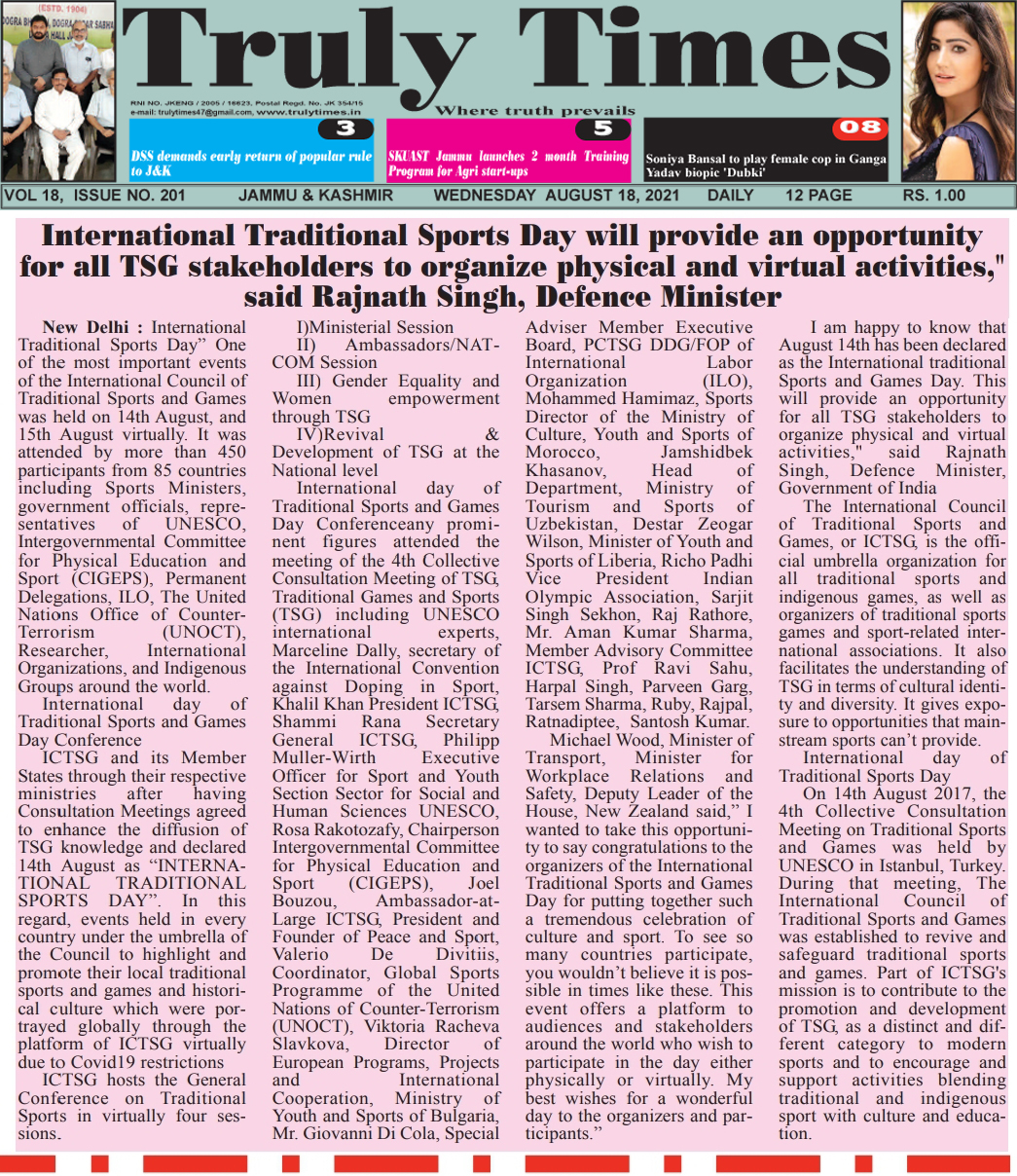
International Traditional Sports and Games Day .#UNESCO #internationaltsgday #ictsg #traditionalsportsandgames #tsg #internationalday #14thaugust #UN #UNDP #UNESCO #iranasodhi #shammirana #ianuragthakur #PMOIndia
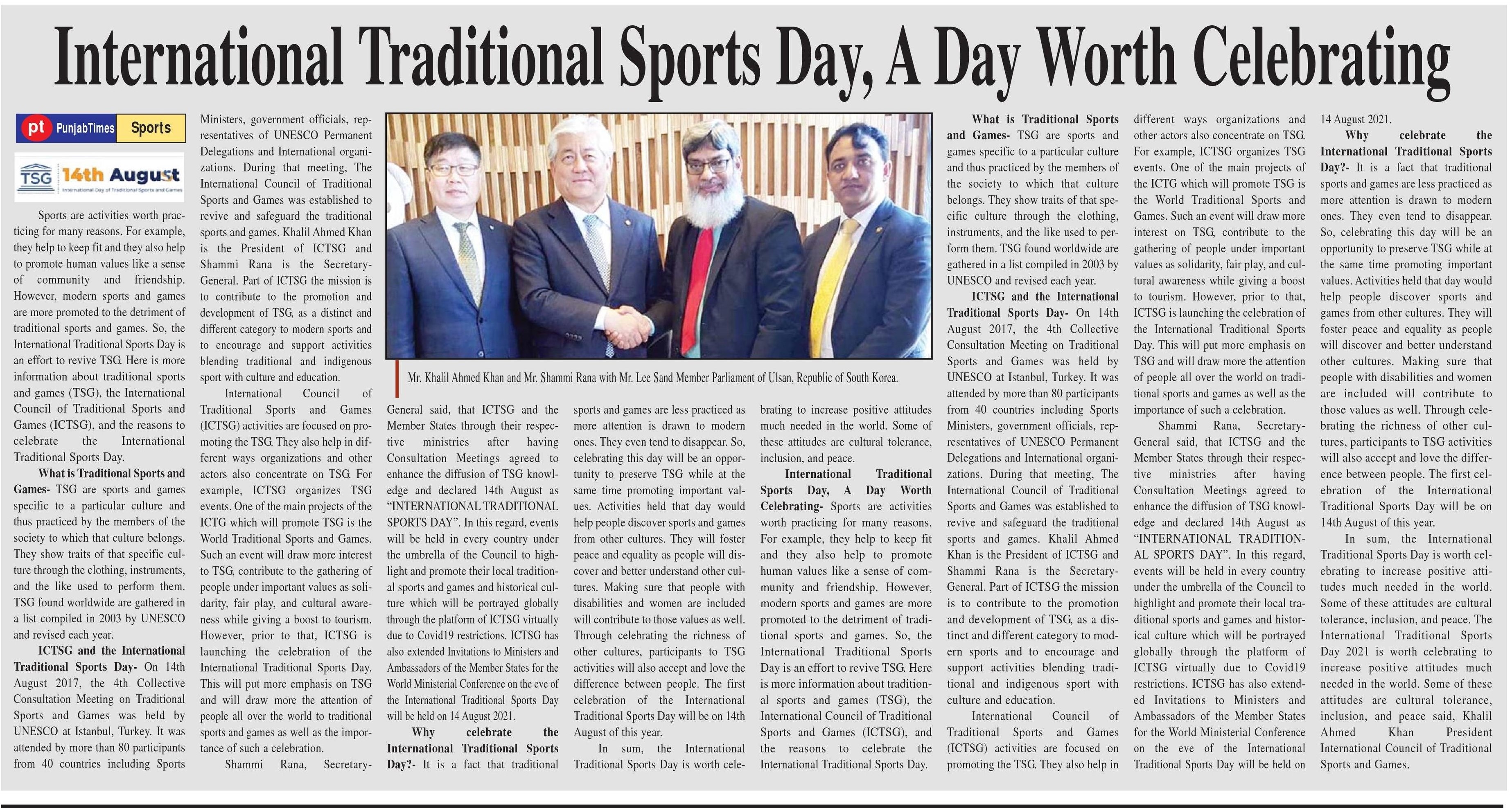
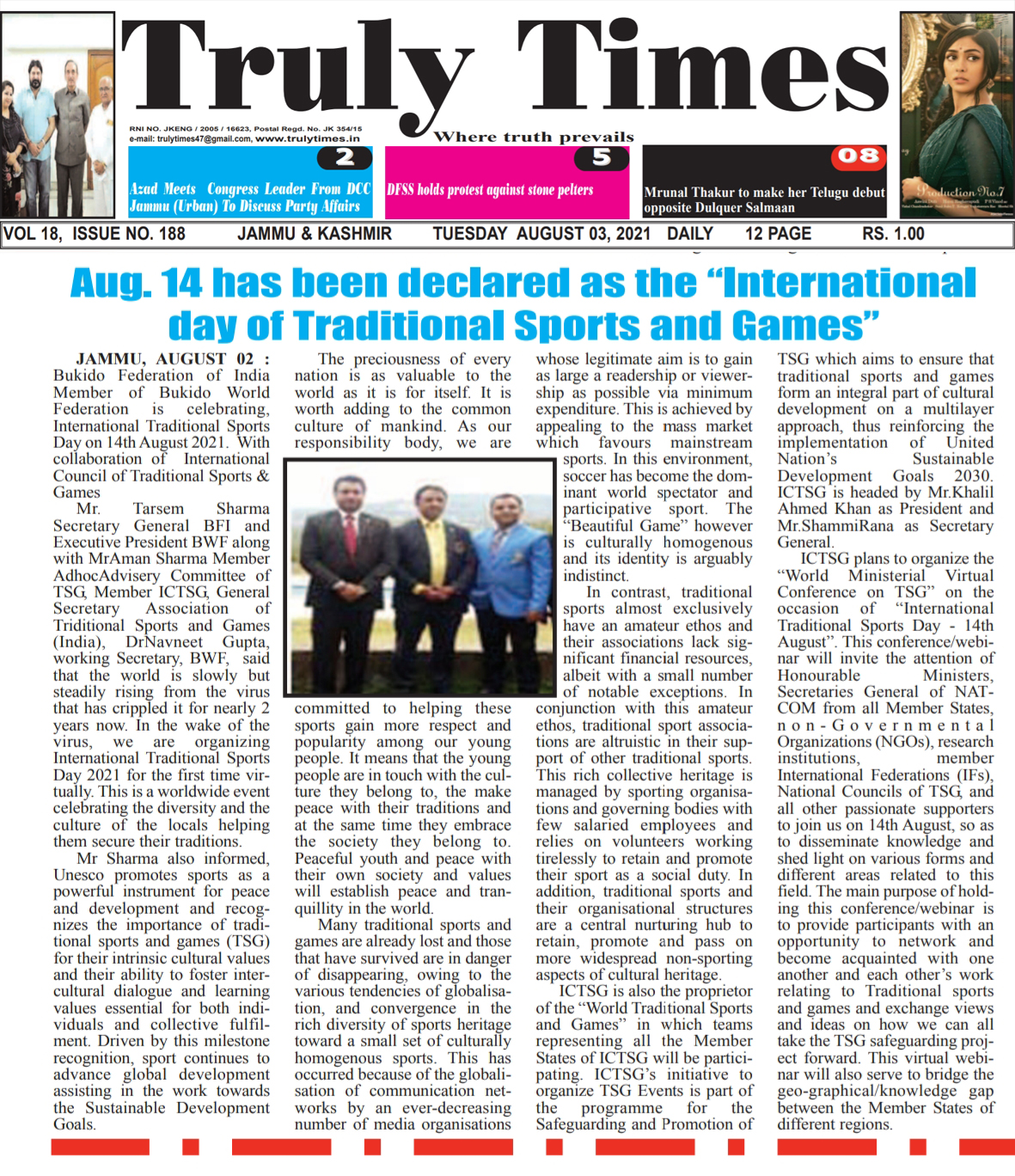
“International Traditional Sports Day” One of the most important events of the International Council of Traditional Sports and Games was held on 14th August, and 15th August virtually. It was attended by more than 600 participants from 90 countries including Sports Ministers, government officials, representatives of UNESCO, Intergovernmental Committee for Physical Education and Sport (CIGEPS), Permanent Delegations, ILO, The United Nations Office of Counter-Terrorism (UNOCT), Researcher, International Organizations, and Indigenous Groups around the world.
ICTSG and its Member States through their respective ministries after having Consultation Meetings agreed to enhance the diffusion of TSG knowledge and declared 14th August as “INTERNATIONAL TRADITIONAL SPORTS DAY”. In this regard, events held in every country under the umbrella of the Council to highlight and promote their local traditional sports and games and historical culture which were portrayed globally through the platform of ICTSG virtually due to Covid19 restrictions
ICTSG hosts the General Conference on Traditional Sports in virtually four sessions.
I)Ministerial Session
II) Ambassadors/NATCOM Session
III) Gender Equality and Women empowerment through TSG
IV)Revival & Development of TSG at the National level
Many prominent figures attended the meeting of the 4th Collective Consultation Meeting of TSG, Traditional Games and Sports (TSG) including UNESCO international experts, Marceline Dally, secretary of the International Convention against Doping in Sport, Khalil Khan President ICTSG, Shammi Rana Secretary General ICTSG, Philipp Muller-Wirth Executive Officer for Sport and Youth Section Sector for Social and Human Sciences UNESCO, Rosa Rakotozafy, Chairperson Intergovernmental Committee for Physical Education and Sport (CIGEPS), Joel Bouzou, Ambassador-at-Large ICTSG, President and Founder of Peace and Sport, Valerio De Divitiis, Coordinator, Global Sports Programme of the United Nations of Counter-Terrorism (UNOCT), Viktoria Racheva Slavkova, Director of European Programs, Projects and International Cooperation, Ministry of Youth and Sports of Bulgaria, Mr. Giovanni Di Cola, Special Adviser Member Executive Board, PCTSG DDG/FOP of International Labor Organization (ILO), Mohammed Hamimaz, Sports Director of the Ministry of Culture, Youth and Sports of Morocco, Jamshidbek Khasanov, Head of Department, Ministry of Tourism and Sports of Uzbekistan, Destar Zeogar Wilson, Minister of Youth and Sports of Liberia, Richo Padhi Vice President Indian Olympic Association, Sarjit Singh Sekhon, Raj Rathore, Mr. Aman Kumar Sharma, Member Advisory Committee ICTSG, Prof Ravi Sahu, Harpal Singh, Parveen Garg, Tarsem Sharma.
Michael Wood, Minister of Transport, Minister for Workplace Relations and Safety, Deputy Leader of the House, New Zealand said,” I wanted to take this opportunity to say congratulations to the organizers of the International Traditional Sports and Games Day for putting together such a tremendous celebration of culture and sport. To see so many countries participate, you wouldn’t believe it is possible in times like these. This event offers a platform to audiences and stakeholders around the world who wish to participate in the day either physically or virtually. My best wishes for a wonderful day to the organizers and participants.”
I am happy to know that August 14th has been declared as the International traditional Sports and Games Day. This will provide an opportunity for all TSG stakeholders to organize physical and virtual activities,” said Rajnath Singh, Defence Minister, Government of India
The International Council of Traditional Sports and Games, or ICTSG, is the official umbrella organization for all traditional sports and indigenous games, as well as organizers of traditional sports games and sport-related international associations. It also facilitates the understanding of TSG in terms of cultural identity and diversity. It gives exposure to opportunities that mainstream sports can’t provide.
On 14th August 2017, the 4th Collective Consultation Meeting on Traditional Sports and Games was held by UNESCO in Istanbul, Turkey. During that meeting, The International Council of Traditional Sports and Games was established to revive and safeguard traditional sports and games. Part of ICTSG’s mission is to contribute to the promotion and development of TSG, as a distinct and different category to modern sports and to encourage and support activities blending traditional and indigenous sport with culture and education.
Shammi Rana
Secretary-General
International Council of Traditional Sports and Games
Rapporteur
UNESCO Ad Hoc Advisory Committee
Traditional Sports and Games(2017~2020)
Secretary General Asian Belt Wrestling Federation
 +1 925-413-4747
 shammirana@gmail.com